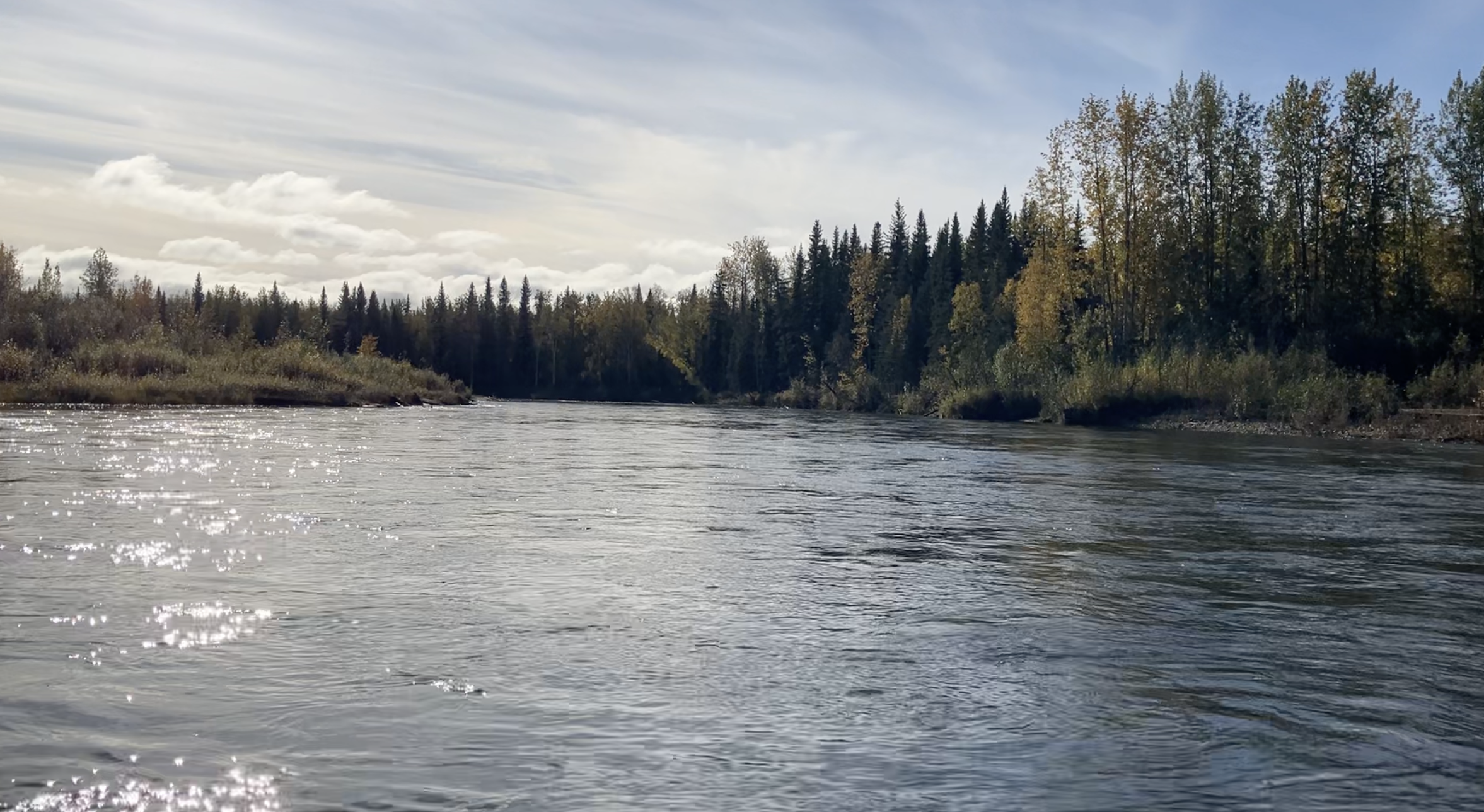
Streambank Stabilization and Habitat Restoration
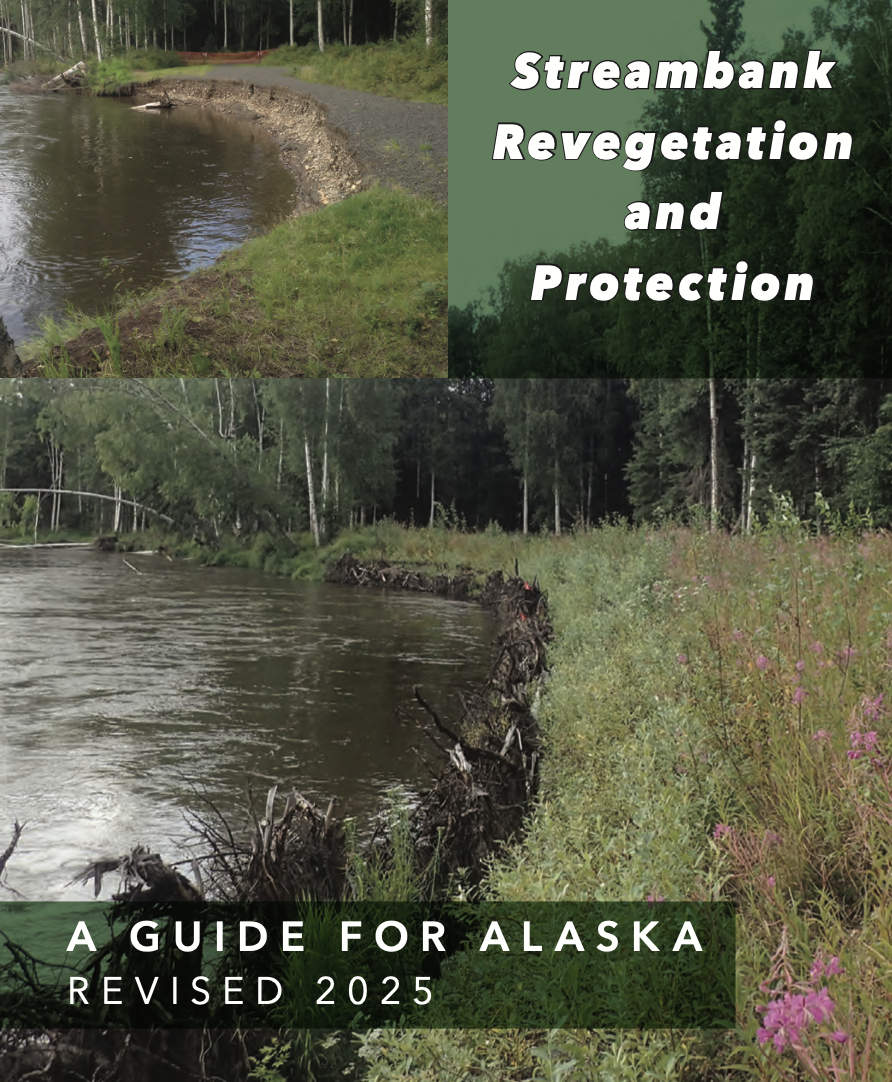
Streambank Revegetation and Protection: A Guide for Alaska
Revised and published in 2025 by the Alaska Department of Fish and Game, and made available at their Habitat Restoration and Enhancements site, this is a comprehensive manual that outlines methods for stabilizing streambanks and restoring riparian vegetation using native plants and natural materials. It covers in detail techniques—such as live staking, brush layers, rootwads, coir logs, and controlled access design—that help reduce erosion, improve fish habitat, and maintain healthy river systems across Alaska.
For more information about this guide and technical assistance to plan or fund a streambank stabilization project, contact the collaborative Cost-Share program through US Fish and Wildlife Service and Alaska Department of Fish and Game.
This resource is a watershed education guide that explains how the Chena River system works—from runoff and storm drains to riparian habitat and green infrastructure—and gives practical guidance to riverfront landowners and community members on protecting water quality, fish habitat, and riverbank stability.
This watershed stewardship guide is intended to help Interior Alaska landowners understand how their property management choices affect salmon habitat and water quality. It explains key stream features, riparian zones, and practical actions—such as protecting vegetation, managing runoff, maintaining septic systems, and improving culverts—that support healthy salmon streams and reduce local impacts.
This publication is a technical literature review that summarizes scientific research on how riparian areas function and how they can be protected or restored. It explains the ecological roles of streamside vegetation, such as streambank stability, floodwater storage, contaminant filtering, and fish and wildlife habitat, and reviews buffer widths, restoration methods, and regulatory approaches relevant to Interior Alaska rivers.
This short pamphlet explains what riparian areas are and how landowners can protect them. It outlines practical “do and don’t” actions like keeping native vegetation, avoiding bank modification without permits, and maintaining buffer zones to prevent erosion, filter runoff, and support fish and wildlife habitat.